
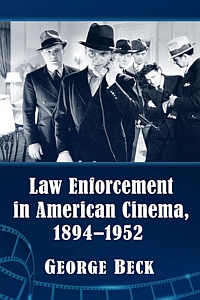
In this short title, author George Beck takes a close look at some movies of the first half of the twentieth century that employed representations of American law enforcement, starting with silent era productions and chronologically end with films noir. Five sections altogether and a final coda chapter on roughly 130 pages consider stereotypes, good […]
You are browsing archives for
Category: B. R. Film
Hillbilly Maidens, Okies, and Cowgirls: Women’s Country Music, 1930-1960 by Stephanie Vander Wel (20
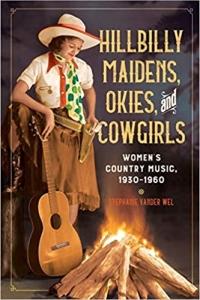
Going back to the early days of medicine shows, vaudeville and traveling entertainment troupes, female performers they already had their regular part in the entertainment industry; and country music, or hillbilly music as it was first named, played a role in building up that reputation. For example, what in the 1940s was transported as “parodic […]
Vigilantes: Private Justice in Popular Cinema by Kevin Grant (2020)
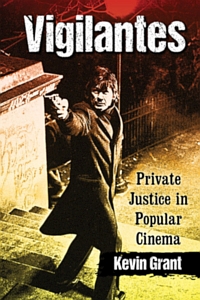
When in movies a crime is committed against a citizen and neither the police force nor judges seem able or willing to catch and punish the assailant, mostly two options are presented to the victim/protagonist: to accept that the law and its divisions can fail sometimes, or to start a crusade against the aggressor all […]
The Western Films of Robert Mitchum. Hollywood’s Cowboy Rebel by Gene Freese (2020)
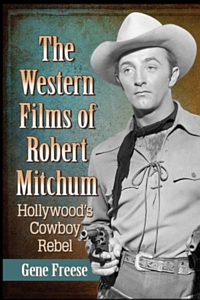
Maybe one of the reasons why actor Robert Mitchum looked so comfortable and at home in western movies, was the fact that he bred horses, preferred the casual cowboy outfit off the film set, and seemingly simply played himself, whenever he took the part of the cowboy, the Sheriff, the outlaw or the weather-beaten stranger […]
Representations of Working-Class Masculinities in Post-War British Culture: The Left Behind by Matth...
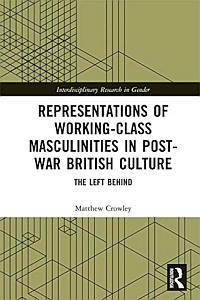
When considering his main subjects, author Matthew Crowley emphasizes that there are many different ways to live a certain working-class masculinity, as there never was just one single “traditional” experience or one simple, unified path that would lead to such an experience for every English male working-class person in the mid-20th century. In his study […]
Crime and Spy Jazz on Screen Since 1971. A History and Discography by Derrick Bang (2020)
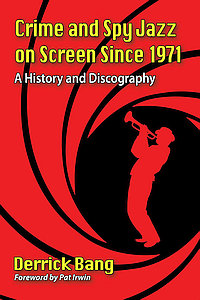
In the second volume of his extensive study on crime and spy movie jazz, author Bang devotes his knowledge to the years 1971 to 2019. His strategy of presenting these scores changes a bit in the present volume, as even though in the early 1970s movies were still shown in movie theaters almost exclusively, just […]
Film Noir Style: The Killer 1940s by Kimberly Truhler (2020)
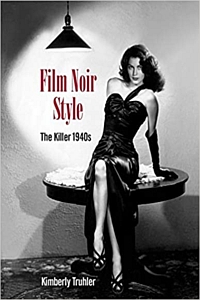
What may come to mind first whenever the visual aspects of the genre film noir are discussed, may be the dark atmosphere, the sharp contrast of light and shadow, and people in desperate situations whose actions echo brilliantly the many original hard-boiled scripts and novel adaptations usually associated with the stlye. One aspect halfway neglected […]
Crime and Spy Jazz on Screen 1950-1970: A History and Discography by Derrick Bang (2020)
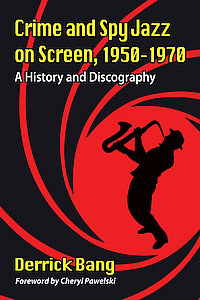
The period of American sound film until roughly the mid-1940s was dominated by soundtracks and extradiegetic audio based on mostly sweet string orchestras, allusions to classical compositions and ballads. Then, in the 1950s and 60s, soundtrack composers increasingly used popular music of the decade before for police/detective/spy action productions, which would be in large part […]
The Rise and Fall of American Science Fiction, from the 1920s to the 1960s by Gary Westfahl (2019)
Even though a title such as “The Rise and Fall” usually has readers prepared for a large, heavy volume that will provide audiences with loads of information amassed in a mostly boring manner, Westfahl’s book on a literary genre differs from that stereotype. In fact, the four major parts (and a short epilogue) read very […]