
Whenever film genres blend, the outcome usually represents more than the sum of its parts; a completely new set of aesthetics comes forward. In this case, author Jamil Mustafa takes a close look at the intersection of vampire horror and “Blaxploitation” films.
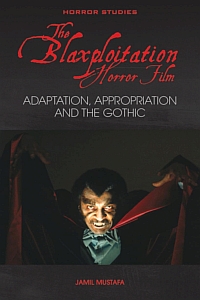 Owed to the peak of such productions, his focus is on the 1970s, though a short revival of the style took place in the late 1990s. Vampire and horror movies are well documented; however, Blaxploitation may need a short introduction. It is a genre that emerged in the early 1970s in the USA, focusing on African American culture, themes, and characters. The term “Blaxploitation” combines “Black” and “exploitation,” describing the often sensationalised use of Black themes in cinema.
Though initially used pejoratively, the genre provided new opportunities for African American actors and directors, ensuring their visibility in leading roles. In this genre blend, vampires symbolize the power dynamics of society—feeding on the marginalized, as depicted through themes of gentrification and colonialism. This culturally significant genre emerged as a response to both the demands of African American audiences for representation and the financial needs of Hollywood. Due to a financial slump during the late 1960s, film studios began targeting African American audiences, who were recognized as a significant market force contributing substantially to box office revenue.
Blaxploitation films typically featured urban settings, and the protagonists were usually strong African American characters fighting against injustice, corruption, or the establishment. Melvin Van Peebles’ Sweet Sweetback’s Baadasssss Song (1971) is often cited as the movie that kick-started it.
Ultimately, it is a complex genre that both empowered and, at times, perpetuated negative stereotypes. Yet another contradiction promoted the rise of the genre: despite their revolutionary content, these movies were often produced within the exploitative structures of the broader film industry, which was primarily controlled by white filmmakers and studios. This tension between the liberatory potential of the narratives and the economic motivations behind their production created a complex dynamic at the heart of Blaxploitation’s legacy.
Despite its controversial nature, the genre created space for Black narratives and identities, set the stage for a new wave of African American cinema, and continues to shape Black cultural expression today. Classics such as Gordon Parks’ Shaft (1971), as well as Foxy Brown (1974) and Coffy (1973)—both directed by Jack Hill and starring actress Pam Grier—are notable examples of Blaxploitation films with strong female leads.
Grier became a pioneering symbol of empowerment for Black women, portraying characters who fought against drug dealers, pimps, and corruption with fierce independence.
However, the genre was also criticized for reinforcing negative stereotypes. The term itself suggests a form of exploitation, indicating that these films often sensationalized aspects of Black urban life, including crime, drugs, and hypersexuality. Consequently, many civil rights organizations, such as the NAACP and the Southern Christian Leadership Conference (SCLC), protested fiercely against certain Blaxploitation productions for their negative portrayals of Black life and for distorting the image of African Americans.
The modern vampires in films like Blacula (1972), directed by William Crain—an alumnus of the “L.A. Rebellion” movement and widely considered the first Blaxploitation horror movie—and The House Next Door (Deon Taylor, 2016) embody the experience of Black Americans facing both internal and external threats. Movies such as Da Sweet Blood of Jesus (Spike Lee, 2014) explicitly use vampirism to explore cultural heritage and addiction. These films also reflect on queerness and lineage, emphasizing marginalized perspectives in powerful ways. Blaxploitation horror films were inherently a form of resistance, countering both the systemic exclusion of Black voices in cinema and the stigmatization of Blackness itself. They appropriated Gothic elements not to exploit but to empower, signifying on earlier adaptations and creating counter-narratives that addressed the realities faced by Black Americans.
This act of appropriation aligns with the broader African American cultural practice of “signifying,” described by Henry Louis Gates as repetition with a difference—both honoring and critiquing the original. The legacy of Blaxploitation horror was shaped by the broader sociopolitical context of the 1970s, including the Civil Rights Movement, Black Power, and the rise of feminist and gay rights struggles.
The genre served not only as a means of expression but also as an avenue for addressing the very real lived experiences of Black communities, ranging from systemic oppression and police brutality to community solidarity and cultural pride.
Across four chapters, the book outlines a structure based on the main archetypes used in Blaxploitation horror. Chapter one, “Queer Bloodlines: The Vampire,” links the vampire figure to Black Power, civil rights, and queerness, utilizing the examples of Blacula and Ganja & Hess (Bill Gunn, 1973). The creation of “monsters” as a commentary on the societal injustice experienced within Black communities is the topic of the second chapter, which breaks down Blackenstein (William A. Levey, 1973) and The Thing with Two Heads (Lee Frost, 1972). Racial identity, shifting expectations, and the complex hybridity of Black life—symbolized by horror creatures—are discussed in chapter three, focusing on Robert Louis Stevenson’s classic Strange Case of Dr. Jekyll and Mr. Hyde and its 1976 interpretation, William Crain’s Dr. Black, Mr. Hyde. Finally, a short resurgence of the Blaxploitation horror film is discussed in the final chapter, with an emphasis on the Candyman series, movies such as Bones, and the successful Blade franchise.
As an art form, Blaxploitation’s influence on American cinema is undeniable. It changed the narrative surrounding Black representation in Hollywood and laid the groundwork for future films with strong Black leads and stories that resonated deeply with Black audiences. When combined with classic horror elements and their unique representations of Black urban life, the genre is defined at its very best.
More recently, films like Jordan Peele’s Get Out (2017) and Us (2019) demonstrate an ongoing connection to the subversive, socially conscious legacy that Blaxploitation films helped establish. Furthermore, the genre exerted a major influence on music, particularly hip-hop culture, where artists such as Snoop Dogg, Ice Cube, and Public Enemy have sampled rare soundtracks and referenced the themes and imagery of Blaxploitation in their lyrics and music videos.
Mustafa masterfully ties together the historical significance, cultural impact, and enduring themes that persist in contemporary horror films, identifying numerous links to Black cinema. The core of Blaxploitation horror, however, lies in its challenge to mainstream cinema, specifically by reinterpreting Gothic archetypes and placing Blackness at the center of narratives that traditionally excluded or vilified it. By confronting taboos around race, gender, and sexuality, these movies pushed boundaries and laid the foundation for a more inclusive and nuanced portrayal of Black life in cinema.
Furthermore, Blaxploitation horror films provided a “cathartic space” for Black audiences, where fears and anxieties regarding systemic racism, marginalization, and other social inequities could be dramatized and exorcised.
These productions established the groundwork for exploring the “return of the repressed” in both a Gothic and sociopolitical sense—revealing and confronting what society often seeks to ignore or silence. Ultimately, they offered both escapism and empowerment, giving audiences an opportunity to see heroic figures who reflected their own experiences and struggles. Especially in later films, they explore the complex interplay of race, class, and cultural identity, while also addressing the shifting realities of Black life in America—from suburbanization and the fragmentation of urban communities to renewed forms of systemic injustice.
“Horror stories told by Black filmmakers are now reformulating what Toni Morrison called ‘American Africanism – a fabricated brew of darkness, otherness, alarm, and desire’,” argues Mustafa.
“This [new] generation of films provides scholars with exciting opportunities and avenues for investigation that are already being pursued.” He concludes that “as these narratives express, address, and release renewed fears about some of the issues that were central to the Blaxploitation horror film—especially police brutality and persistent racial misunderstanding and inequity—they offer audiences both a means of catharsis and a measure of hope.”
Review by Dr. A. Ebert © 2026
Jamil Mustafa. The Blaxploitation Horror Film. Adaptation, Appropriation and the Gothic. University of Wales Press (Horror Stories Series), 2023, 272 p.
