

When the first (real) talking movie was introduced in 1928 (Lights of New York) it was a gangster movie. The use of gangster lingo, and the sound of gunshots made the genre even more successful. The short, brisk exchanges of the underground characters added more to the illusion of authenticity; the first full-length gangster movie […]
You are browsing archives for
Category: B. R. Film
From Radio to the Big Screen. Hollywood Films Featuring … by Hal Erickson (2014)

When stars like Bob Hope or Bing Crosby started their careers in the movies, they actually started over, since they already were highly successful through their earlier work for radio shows, drama, mystery and comedy. These old shows, home of many superior actors and great voices, today are mostly forgotten, and the programs will only […]
Steaming Into a Victorian Future by Julie Anne Taddeo and Cynthia J. Miller (eds.) (2014)
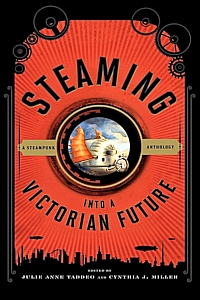
After all, Steampunk as a genre of literature, fashion, film or even music is a truly young being, hardly older than 30 years, if we consider William Gibson’s and Bruce Sterling’s novel The Difference Engine (1990) as one of the very earliest works of fiction now considered part of the movement and probably its kick […]
Saying It With Songs: Popular Music and the Coming of Sound to Hollywood … by Katherine Spring (2013
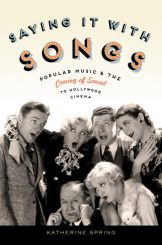
It may be hard for us today to imagine what moviegoers in the 1920s must have felt when they watched their first talkies in the cinemas. By now, there have been a number of movies describing just this peculiar sensation. But what the audience must have experienced when suddenly their movie stars uttered words could […]
Dream West. Politics and Religion in Cowboy Movies by Douglas Brode (2013)

The myth and cultural legacy of one of the most powerful American symbols, the cowboy, is at the center of Douglas Brode’s volume Dream West. While it is not so much the cowboy itself that is analyzed and put in relation to other national icons, it is the set of values and the way the […]
Homer Simpson Ponders Politics: Popular Culture as … by Timothy Dale and Joseph Foy (eds.) (2013)
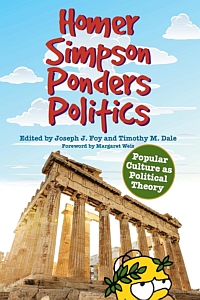
For many centuries stories, tales, parables and myths not only have been sources of inspiration or simple methods of entertainment; those creations were models to live and judge by and inspirations of how to react in certain situations (as well as guidelines of how not to). Tales and stories told over and over again finally […]
Houses of Noir: Dark Visions from Thirteen Film Studios by Ronald Schwartz (2014)
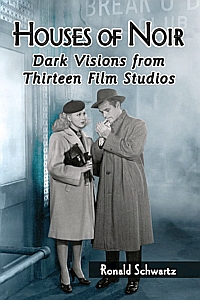
For the connoisseur of old wine, it is not impossible to determine origin, year and characteristics of a certain brand or region by taking a sample. The same goes for noir films, which due to lighting, editing, setting, or simply by their respective casts can be traced back to a particular studio or production year […]
A Companion to Film Noir by Andrew Spicer and Helen Hanson (eds.) (2013)
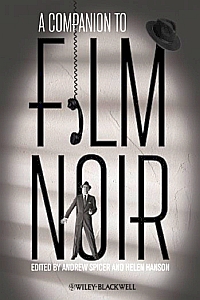
This edition of mostly recent texts on the style, genre and aesthetics of film noir covers a huge variety of themes such as technical details and production modes, elaborates on the roots of many noir films in American (hard boiled) detective fiction and pulp stories, and expands into the survey of the many “victims,” so […]
Alfred Hitchcock’s America by Murray Pomerance (2013)
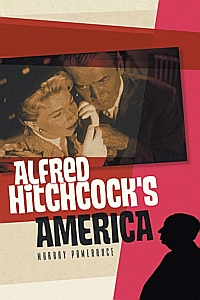
With his second publication on Alfred Hitchcock, Professor Pomerance has now given focus to the Americanization of the great director’s themes and film settings. After all, Hitchcock remained British in character all of his life and probably had not imagined becoming an American subject in his early days. That things would turn out so well […]